Knee pain has a way of showing up in very specific, very familiar moments: going down stairs more than up, standing up after sitting for a while, squatting to pick something up, or during and after a run. Some patients have a diagnosis already, maybe from an MRI showing mild wear or a small meniscus finding. Others have been told everything looks structurally fine and have no explanation for why it still hurts. Either way, the pain tends to be persistent enough that stretching and rest haven't fully resolved it, and it's often unclear whether the knee itself is really the source of the problem.
That uncertainty of not knowing whether this is a knee problem or something feeding into the knee from somewhere else, is usually what brings people in.
At Trinity, dry needling for knee and lower leg pain starts with a thorough intake: questions about when and how the pain shows up, observation of how you move (including squatting, stairs, and walking), and palpation through the quadriceps, hamstrings, calf, and surrounding musculature. We're looking above and below the knee, not just at the knee itself, since hip mechanics, ankle mobility, and foot mechanics can all influence how the knee is loaded during movement.
We combine that evaluation with the needle experience that comes from years of practicing as licensed acupuncturists across a wide range of conditions and tissue depths. Treatment isn't based on a fixed set of points for "knee pain.” It's built around what your individual evaluation shows. When traditional acupuncture also fits your case, it can be incorporated into the same plan rather than treated as a separate add-on.
Knee pain often develops because the forces moving through the joint have changed, even when the knee itself hasn't been directly injured. That can happen through a change in activity or training, a period of favoring one leg, weakness in the muscles that control the knee during movement, or restrictions in mobility elsewhere — the hip or ankle, for example — that shift more demand onto the tissues around the knee.
Two patients can describe nearly identical anterior knee pain, worse on stairs and after sitting, and have very different underlying pictures. One may have muscular weakness or altered movement patterns contributing to how the knee is loaded during activity. Another may have limited hip or ankle mobility that's changing how the leg moves, even though the symptoms are felt primarily at the knee.
Lower leg pain can have its own set of contributors. The calf, tibialis anterior and posterior, and muscles along the outside of the lower leg can become irritated with changes in walking, running, training volume, or foot and ankle mechanics. As with knee pain, the location of the symptoms doesn't always tell us which tissue is responsible, so lower leg complaints are evaluated in the context of the ankle, foot, knee, and activity that brings them on.
Where you feel knee pain doesn't always tell us which tissue is driving it. Hip mechanics, quadriceps function, ankle mobility, and foot mechanics can all change the forces going through the knee, sometimes substantially.
This is why we evaluate above and below the knee rather than simply needling the area that hurts. Limited hip control during a single-leg movement, or restricted ankle motion, can change how the leg moves and how the knee is loaded. In that situation, focusing only on the painful area may miss an important contributor to why the symptoms keep returning.
Dry needling can be useful when an irritable or overloaded muscle: a tight quadriceps, hamstring, calf, or hip muscle, is genuinely contributing to your knee symptoms. Addressing that muscular component may help reduce muscle pain, sensitivity, or tension occurring alongside the knee symptoms.
It's important to be clear about what dry needling does not do. It doesn't repair a meniscus tear, regenerate cartilage, reverse osteoarthritis, or repair a ligament injury. If your imaging shows one of those findings, dry needling isn't aimed at fixing that finding — it may still be reasonable to address muscular or biomechanical contributors around it, when they're genuinely part of the picture, but that's a different goal than treating the structural finding itself.
Depending on the evaluation, treatment may include dry needling of the muscles found to be clinically relevant, which may extend well beyond the knee itself, along with traditional acupuncture and recommendations around mobility or activity modification. In some cases, we'll suggest coordinating with a physical therapist for strengthening work, or recommend a medical evaluation or imaging if your history or exam suggests something outside what dry needling is meant to address.
Not every case of knee pain is a good fit for dry needling. Significant swelling, inability to bear weight, a recent acute traumatic injury, true locking of the joint, or significant instability all need medical evaluation before considering treatment here. Progressive weakness or numbness, or calf swelling and warmth that could suggest a vascular issue, also warrant prompt medical attention rather than dry needling. If something in your evaluation points in one of these directions, we'll say so directly and help point you toward the appropriate care.
Can dry needling fix a meniscus tear or arthritis shown on my MRI?
No. Dry needling doesn't repair cartilage, regenerate tissue, or reverse structural changes like a meniscus tear or osteoarthritis. What it may help with are muscular or myofascial contributors around the joint, when they're genuinely present and contributing to your symptoms.
How do I know if my knee pain is muscular or something structural?
That's part of what the evaluation is for. Where the pain is located, what movements provoke it, how the knee and surrounding joints move, and findings from the physical exam can help us understand whether muscular or myofascial factors are contributing or whether something else should be considered. Sometimes more than one factor is involved, which is why we assess before recommending treatment.
Do I need physical therapy in addition to dry needling?
Sometimes. If the evaluation points to weakness, mobility limitations, or movement patterns that would benefit from active rehabilitation, we may recommend working with a physical therapist alongside treatment here.
How many sessions will I need?
That depends on how long the problem has been present, what's contributing to it, and how your body responds to treatment. We reassess as we go rather than prescribing a predetermined number of visits.
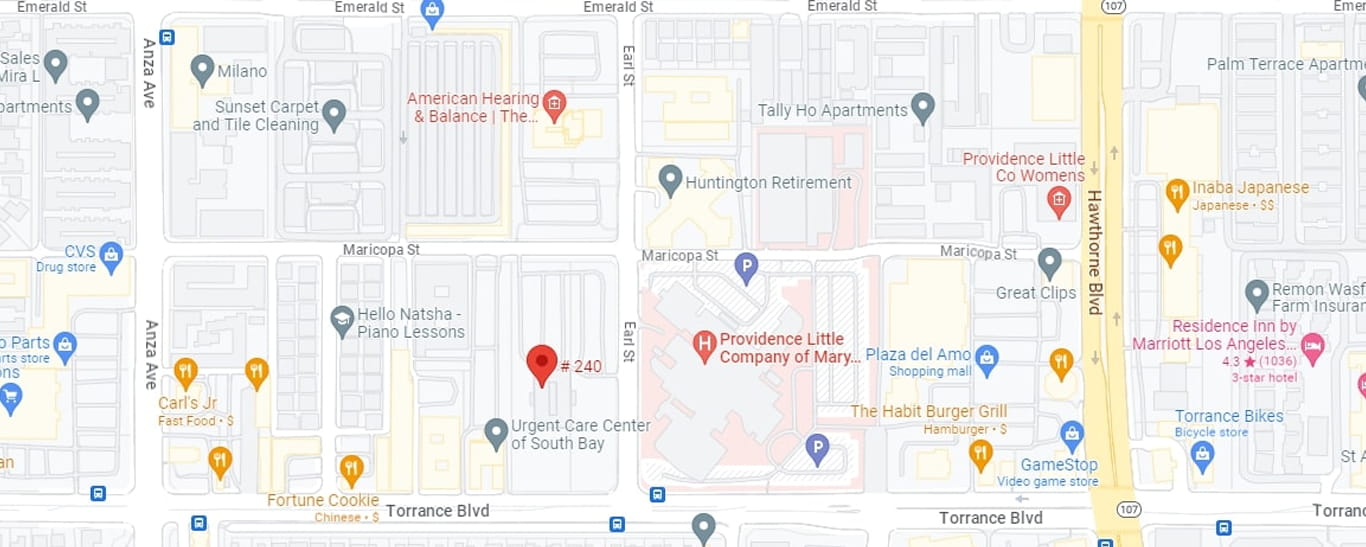
If knee or lower leg pain has been sticking around, the first step is figuring out what's actually contributing to it. An evaluation can help determine whether dry needling is appropriate and, just as importantly, when something else may be needed. Trinity Acupuncture is located in Torrance, CA, serving patients throughout the South Bay, including Redondo Beach, Manhattan Beach, Hermosa Beach, and Palos Verdes.
If you do not see your condition listed, please contact us. Many concerns are interconnected, and care is always personalized.