If you've been dealing with hip or glute pain, you probably already know the pattern. It flares up after a long day of sitting, tightens up on the drive home, and sometimes takes a few minutes of walking before it loosens. Or maybe it shows up on stairs, during a run, or as a deep ache on one side that never quite resolves no matter how much you stretch it. Many patients have already tried foam rolling, stretching routines, or a massage or two — and while those might help temporarily, the tightness keeps coming back in the same spot.
That pattern, more than anything else, is usually what brings people in. Not the pain itself, but the fact that it keeps returning.
At Trinity, dry needling for hip and glute pain starts with a thorough intake: a combination of questions about how and when the pain shows up, observation of how you move, and hands-on palpation of the hip, pelvis, and surrounding musculature. We're looking at more than just where it hurts. We want to understand hip mobility, how well certain muscles are recruiting during movement, and whether the lumbar spine or opposite side may be contributing to what you're feeling.
We combine that evaluation with the needle experience that comes from years of practicing as licensed acupuncturists across a wide range of conditions and tissue depths. Treatment isn't based on a fixed set of points for "hip pain" or "glute pain.” It's built around what your individual evaluation shows. When traditional acupuncture also fits your case, it can be incorporated into the same plan rather than treated as a separate add-on.
Gluteal and hip pain can develop when a muscle is repeatedly being asked to take on more load than it can comfortably manage. That can happen for a number of reasons: prolonged sitting that leaves hip muscles underused for hours and then suddenly loaded, a change in activity or training volume, altered walking or running mechanics, or another area — often the lower back or opposite hip — quietly shifting more work onto the muscles on one side.
Two patients can describe nearly identical pain — a deep ache in the same spot on the outside or back of the hip — and have very different underlying contributors. One may have a genuinely overloaded gluteus medius from years of favoring one leg. Another may have lumbar nerve-root irritation producing pain in the same region, with the muscle itself playing a much smaller role. Telling these apart matters, because the appropriate treatment is different for each.
Tenderness in a gluteal muscle doesn't automatically mean that muscle is the primary source of the problem. Hip and glute pain frequently has contributors above or below the area where it's felt.
The lumbar spine is a common example: irritation or restriction there can refer pain into the glute or produce nerve-related symptoms that feel similar to a tight muscle. Pelvic and hip joint mechanics also matter: if hip rotation or extension is restricted, the surrounding muscles often compensate by working harder than they should. Even the opposite hip can play a role, particularly if there's a longstanding asymmetry in how weight is distributed while standing or walking.
If the same gluteal muscle keeps becoming tight or painful despite treatment, that's usually a sign worth paying attention to. We want to understand what keeps asking that muscle to work harder than it should, rather than simply needling the painful spot every time it flares up.
Dry needling can be useful when an irritable or overloaded muscle is genuinely contributing to hip or glute symptoms. This may include a gluteal muscle that's become irritable from repetitive loading or compensation, or a myofascial pain pattern that reproduces your symptoms.
That said, our goal isn't to find every tight muscle in the area and needle it. We want to understand why that tissue became irritated in the first place, since needling alone doesn't resolve the underlying reason the muscle keeps overworking.
Dry needling also isn't intended to correct hip joint pathology, meaningful osteoarthritis, tendon injuries, or significant structural findings. When one of those is present, we'll be upfront about what dry needling can and can't be expected to do for it.
Depending on what the evaluation shows, treatment may include dry needling of the muscles found to be clinically relevant, traditional acupuncture, and recommendations around hip mobility or activity modification. In some cases, we'll suggest coordinating with a physical therapist for strengthening and rehabilitation work, or recommend a medical evaluation if something in your history or exam points toward a diagnosis outside our scope.
Not every case of hip or glute pain is primarily muscular, and dry needling isn't always the appropriate first or only treatment. Significant joint pathology, suspected tendon injury, recent trauma, or symptoms suggesting nerve involvement may require additional evaluation or a broader treatment plan. Symptoms such as progressive weakness, significant numbness, inability to bear weight, or severe pain following trauma warrant medical evaluation. If something during your assessment suggests dry needling isn't the appropriate next step, we'll say so directly and help point you toward the right care.
How do I know if my hip pain is muscular or coming from something else?
Muscular and myofascial pain may reproduce in recognizable ways with palpation and movement testing, while joint, nerve, or lumbar-related pain often presents differently. We assess for these distinctions before recommending treatment.
Does dry needling hurt?
Most patients feel a brief, dull ache or cramping sensation when the needle reaches an irritable muscle, which typically fades quickly. Sensitivity varies by person and by area.
Will I also need physical therapy?
Sometimes. If the evaluation points toward weakness, movement patterns, or mobility restrictions that need active rehabilitation, we may recommend working with a physical therapist alongside treatment here.
How many sessions will I need?
That depends on how long the problem has been present, what's contributing to it, and how your body responds to treatment. We reassess as we go rather than prescribing a predetermined number of visits.
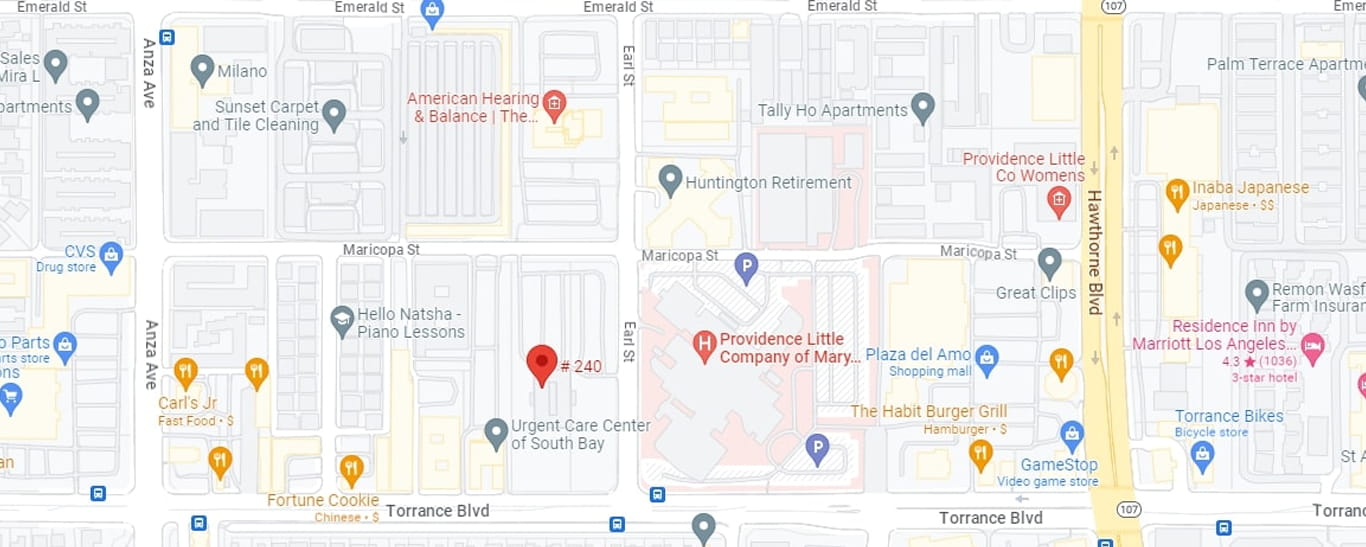
If hip or glute pain has been sticking around, the first step is figuring out what's actually contributing to it. An evaluation can help determine whether dry needling is appropriate and, just as importantly, when something else may be needed. Trinity Acupuncture is located in Torrance, CA, serving patients throughout the South Bay, including Redondo Beach, Manhattan Beach, Hermosa Beach, and Palos Verdes.
If you do not see your condition listed, please contact us. Many concerns are interconnected, and care is always personalized.