Dry needling is a targeted neuromuscular technique that involves the use of a fine, filiform needle to deactivate a hyperirritable myofascial trigger point within a dysfunctional skeletal muscle. This procedure can be used to provide an immediate, direct mechanical reset when tight muscles cannot release with regular stretching, foam rolling, and massage. The needle is inserted directly into the contracted motor endplate to provoke a local twitch response, to restore circulation, and to break the pain cycle.
This article explains when to incorporate dry needling into a recovery program, outlines the physiological signs of chronic myofascial entrapment, and identifies clinical conditions that respond to targeted treatment.
Chronic tightness develops when hyperirritable muscle bands lock into a continuous metabolic crisis. Contracted muscle tissue chokes off local capillary blood flow, creating an acidic, oxygen-starved environment. Standard self-care addresses only superficial tissue layers, leaving deep motor endplate dysfunctions uncorrected and allowing muscular tightness to recur within days.
The Biochemical and Mechanical Entrapment of Myofascial Trigger Points
When you have a myofascial trigger point, the microscopic sarcomeres within the muscle fibers are in a state of sustained contraction. This local mechanical clamping effect causes the capillary beds in the immediate vicinity to be pinched shut, resulting in a complete lack of arterial blood flow to the area, no fresh oxygen, and no vital cellular nutrients.
The circulatory system simply can't perfuse the contracted area, so you are left with a state of severe tissue hypoxia. Metabolic waste products build up very rapidly in the stagnant interstitial fluid. Active, untreated trigger points contain high levels of various irritants, such as substance P, bradykinin, and calcitonin gene-related peptide, which are all acidic.
These chemicals have a profound effect on the local nociceptors, lowering their sensory threshold and thus generating a constant state of pain for the central nervous system (CNS). As these pain signals are continuously firing up the spinal cord, the adjacent motor neurons respond by maintaining the contraction of the muscle as a form of protection.
You are in a vicious cycle of metabolic starvation and protective guarding, which prevents the muscle fibers from lengthening out through normal rest or passive mobility work. Passive rest and mobility routines remain ineffective at disrupting this neurological feedback loop without a direct, targeted physical stimulus to the dysfunctional motor endplate.
Why Conventional Stretching and Massage Provide Only Temporary Relief
Static stretching and foam rolling simply will not get rid of deep myofascial knots for fundamental biomechanical reasons. When you stretch a muscle containing a rigid trigger point, only the healthy, elastic tissue lengthens. The contracted knot remains locked, forcing the flexible tissue to absorb excessive strain while the dysfunctional sarcomeres stay completely contracted.
Deep tissue massage is useful in that it provides a good amount of external compression, but the hands, thumbs, and elbows are such a wide surface area that they can't really focus the force.
If your hyperirritable band is sitting deep in your postural muscles, then manual compression is often unable to get to the actual motor end plate without causing a lot of bruising in the superficial tissue. Although manual massage provides temporary vasodilation and localized warmth, it often fails to resolve the underlying ischemic crisis, allowing tension, stiffness, and restricted range of motion to recur once mechanical pressure is removed.
If chronic muscle pain restricts your daily movement, disrupts your sleep, or fails to resolve with physical therapy, targeted dry needling delivers the precise stimulus required to deactivate persistent motor endplates and restore your functional mobility.
Persistent Muscle Knots That Resist Manual Release
You should consider dry needling if palpable, tender bands in your muscles persist despite repeated foam rolling, heat application, and hands-on therapy. Once a muscle knot becomes chronic, the fibrotic collagen will form a dense layer of scar tissue around the contracted sarcomeres, creating a very thick physiological barrier.
This thick layer of scar tissue prevents surface pressure from getting to the core of the knot. When repeated pressure from a foam roller or massage ball fails to restore tissue pliability under your shoulder blade or hip, your muscle has reached the limit of surface-level therapy.
A solid filiform needle goes right through the skin and fascia and delivers the mechanical stimulation directly into the core of the contraction. The needle disrupts dense fibrotic adhesions, restores arterial blood flow to the starved core, and releases tight muscle fibers that surface pressure cannot reach. This targeted physical stimulation triggers localized vasodilation, initiating an acute healing cascade that rapidly replaces rigid scar tissue with compliant, organized muscle fibers.
Consequently, patients experience an immediate drop in tissue resistance, restored baseline muscle resting length, and significant structural decompression that sustains lasting pain relief across deep postural stabilizers.
Referred Pain Patterns and Neuromuscular Compensation
Hyperirritable trigger points can often produce symptoms that are way out of proportion to their actual anatomical location by sending false pain signals down the shared neural pathways. The pain radiates because the constant pain signals from a 'locked' muscle will overwhelm the spinal cord, and the brain will interpret this as pain down your arm or leg.
Commonly referred pain patterns treatable with dry needling include:
- Upper trapezius contractions that radiate upward behind your ear and trigger throbbing tension headaches
- Infraspinatus trigger points in your shoulder blade that send deep aches down your biceps and forearm
- Deep gluteal and piriformis knots that mimic sciatic nerve pain or irritate adjacent neural structures, referring to sharp discomfort down your posterior leg
- Quadratus lumborum stiffness along your lower spine that projects a diffuse ache across your sacroiliac joint and groin
Only treating the site of the radiating pain leads to suboptimal clinical results. Dry needling deactivates the primary motor endplate responsible for the referral pattern, directly interrupting the pain cycle at its neurological origin.
Plateaued Progress in Active Physical Rehabilitation
During physical rehabilitation or strength training, active trigger points prevent target muscles from firing correctly, a clinical phenomenon known in physical medicine as reflex neuromuscular inhibition. Your central nervous system reflexively shuts down neural drive to the irritated tissue to protect surrounding joints. Performing corrective exercises while a muscle remains inhibited forces your body into faulty movement patterns, overloading muscles never built to carry that mechanical strain.
That compensatory overload leads to secondary strains and ongoing joint rubbing. If you have been doing your strength work for weeks and you still have not gotten back to baseline power and mobility, then dry needling will switch off that inhibitory reflex. Once the trigger point is deactivated, the muscle can then turn on properly, and you can go on to do your rehab work with correct biomechanics and with regained strength.
Dry needling targets the taut myofascial bands across the body to eliminate focal irritation and restore healthy joint movement. It provides decisive relief for chronic issues caused by prolonged desk posture, repetitive athletic strain, or traumatic muscle spasms from auto accidents.
Cervical Spine Tension, Postural Strain, and Tension Headaches
Hunching over a computer screen or mobile phone all day is a real strain on your neck muscles. As your head moves forward, the gravitational load on your levator scapulae, upper trapezius, and suboccipitals is multiplied. Over time, with this poor posture, these postural stabilizers will develop dense trigger points, resulting in chronic stiffness and restricted head movement.
The suboccipitals at the base of the skull frequently entrap the greater and lesser occipital nerves or refer pain to the fronto-orbital region, producing cervicogenic headaches. Concurrently, hypertonicity in the upper trapezius and cervical paraspinal muscles generates classic band-like tension across the temples and forehead.
Dry needling applies precise localized stimulation to release these hypertonic cervical and suboccipital tissues, decompressing peripheral nerves, relieving cervical facet joint stress, and alleviating both tension and cervicogenic headaches.
Lumbar Spasms, Gluteal Tightness, and Pelvic Dysfunction
Lower back pain often continues because the deep lumbar stabilizers go into acute spasm to protect the vulnerable discs and facet joints. The multifidus, psoas major, and quadratus lumborum are all deep stabilizing muscles lying beneath the large superficial muscle groups and are very difficult to release with manual massage.
When these deep stabilizers are locked in spasm, they compress the lumbar vertebrae, alter your pelvic tilt, and create severe lower back tightness when you are simply bending or walking. At the same time, trigger points in the gluteus medius and piriformis are destabilizing your pelvis and creating a very abnormal gait.
Inserting filiform needles directly into these deep stabilizers breaks the spasm-pain-spasm cycle, re-establishes symmetrical pelvic motion, and significantly reduces abnormal compressive loading across the lumbar spine.
Repetitive Strain Injuries and Overuse Tendinopathies
Overuse injuries such as lateral epicondylalgia (tennis elbow), medial epicondylalgia (golfer’s elbow), Achilles tendinopathy, and plantar fasciopathy rarely originate as isolated, acute inflammatory conditions. Tendons are passive fibrous structures that attach the active muscle belly to bone.
If repetitive occupational tasks or sporting activities lead to the forearm or calf muscles becoming chronically shortened, then those tight muscles will be constantly pulling with excessive traction on the tendon insertion. Ice and pain creams will only give temporary relief as the tight muscle continues to pull aggressively on the bone.
Dry needling acts on the hypertonic muscle belly itself and thus releases the mechanical strain that is causing the tendon to become inflamed. Relieved of chronic tensile traction, the compromised collagen matrix can undergo physiological remodeling and tissue repair.
Dry needling triggers immediate neurophysiological changes at the precise moment of needle insertion. By directly engaging dysfunctional motor endplates, the needle normalizes local tissue chemistry, restores microcirculation, and halts the chronic cycle of protective muscle spasms.
Eliciting the Local Twitch Response for Neuromuscular Deactivation
When a practitioner inserts the needle tip into an active trigger point, the muscle produces what is known as a local twitch response (a local spasm). This is a rapid twitch, which is a spinal reflex produced by the mechanical stimulation of the hyperactive motor endplates.
Although the sensation feels like a brief, dull cramp or muscle jump, it delivers profound therapeutic benefits:
- Mechanically disrupting contracted sarcomeres to restore baseline muscle fiber length
- Flushing stagnant capillary beds to restore oxygenated arterial blood to ischemic tissue
- Diluting high concentrations of Substance P, CGRP, and biochemical irritants within interstitial fluid
- Delivering high-density afferent sensory input to the spinal cord to suppress central pain pathways
Once the local twitch is over, the previously stiff muscle fiber achieves a profound and immediate relaxation. The aberrant motor firing is switched off, and normal tissue perfusion can resume without any residual involuntary motor endplate spasm.
Managing Post-Treatment Soreness and Enhancing Recovery
Mild post-treatment soreness is a normal physiological response marking the initiation of tissue repair. This is often likened to the delayed onset muscle soreness that you get 24 hours after a really good (and hard) gym session. To speed up tissue recovery and ease post-treatment soreness, take these four practical, simple steps:
- Drinking generous amounts of water to support cellular hydration and accelerate metabolic waste clearance
- Applying moist heat over the treated muscle groups for twenty minutes to stimulate local capillary blood flow
- Performing light, continuous movements such as walking or gentle range-of-motion routines to maintain tissue elasticity
- Avoiding strenuous weightlifting or aggressive athletic competition involving the treated area for forty-eight hours
As post-treatment soreness resolves over the subsequent 48 hours, patients typically experience reduced muscular tension, increased joint mobility, and prolonged relief from chronic myofascial restriction.
Chronic muscle tightness restricts joint mobility, disrupts restorative sleep, and degrades overall functional movement. When conventional stretching, massage, and therapeutic exercise fail to yield lasting progress, dry needling provides the targeted mechanical stimulus required to release deep myofascial trigger points and re-establish neuromuscular function. Do not allow untreated muscular spasms to cause permanent joint dysfunction or progressive compensatory injuries.
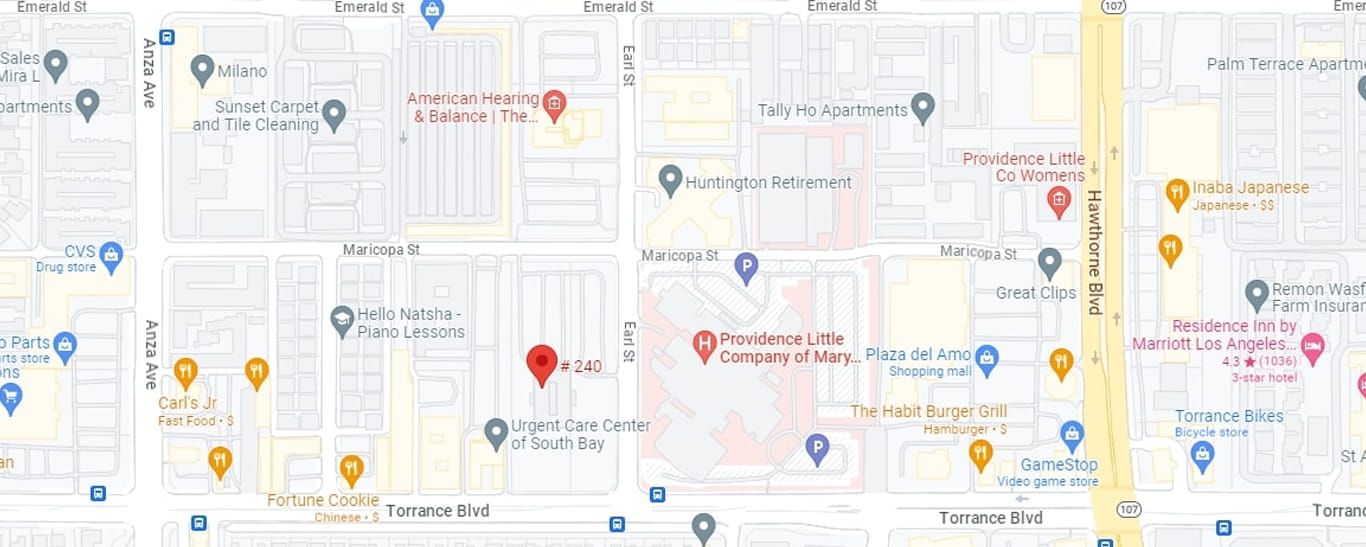
Trinity Acupuncture delivers targeted dry needling protocols tailored to your specific neuromuscular condition. Our team conducts a comprehensive diagnostic assessment to isolate the primary driver of your chronic pain and apply targeted intervention. Call us at 310-371-1777 today to schedule a consultation and clinical assessment with our experienced acupuncturists in Torrance, CA.