When most people think of massage, they imagine a calm setting focused on relaxation. However, some individuals need a more targeted approach to address deeper physical issues. Clinical massage therapy is designed to address these issues. It is an outcome-based practice aimed at treating certain medical conditions, chronic pain, and physical limitations. Therapists use a detailed understanding of anatomy, movement, and body systems to identify and treat soft tissue dysfunction. This approach is especially helpful for people recovering from injuries, managing conditions such as sciatica, or regaining mobility after surgery. In addition to clinical massage, acupuncture can support healing by improving circulation, reducing inflammation, and restoring balance within the body. When combined, these therapies enhance recovery and promote long-term results. Clinical massage works by addressing the source of discomfort while improving overall function. Read along to understand how this approach functions and how it can help you in the healing process.
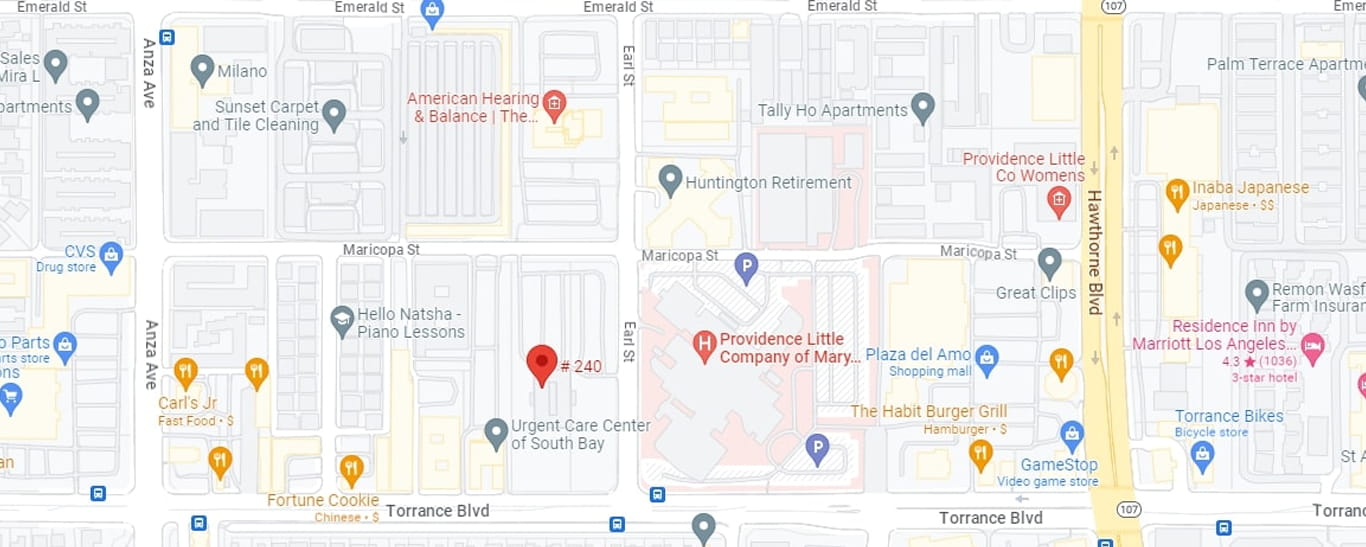
Clinical massage is offered as part of our integrated clinical support in Torrance, where it is coordinated with acupuncture and Pilates for patients managing pain or recovering from injury.
The initial clinical massage session will feel more like a visit to a physical therapist or a specialist than a spa day. You will start by completing a comprehensive health history form that will include your previous injuries, medications, and physical objectives.
These details help ensure the treatment is safe and effective. You will then have a consultation to explain exactly where you feel pain and what activities worsen it. The therapist will listen to your concerns and apply them to the physical examination that will follow.
As the session progresses, you will see that the therapist is highly attentive to the specific areas you discussed. You will be covered with sheets to preserve your privacy while focusing on specific areas being treated during the session.
You should be ready to give feedback during the session about the pressure and the sensations that you are experiencing. If the pressure seems too strong or you experience a sharp pain, you should inform the therapist as soon as possible so that they can change their technique.
The therapist will give you instructions on home care at the end of your treatment. These are straightforward stretches or postural adjustments you can perform yourself to maintain the progress made during the session.
You may be advised to use heat or ice on the affected area or to drink more water to help your body adapt to changes in your muscles. The therapist will also discuss a follow-up plan with you and how many sessions they think you will need to achieve the desired results. This is a holistic method that makes you a participant in your own healing process.
The Purpose and Approach
You may be accustomed to the atmosphere of a classic spa, where the main goal is to reduce stress and foster relaxation. Although wellness massage is beneficial for mental health and overall circulation, clinical massage therapy is performed on a fundamentally different principle and with a different goal.
When you choose a clinical session, the focus shifts from a global, full-body experience to a problem-specific massage session. You are not just a client who wants a relaxing hour; you are a patient who wants a functional change in your body.
In a wellness environment, the therapist will tend to follow a routine that addresses all major muscle groups, regardless of your particular physical history. Conversely, a clinical therapist develops a treatment plan that is grounded in your specific medical diagnosis or physical complaint.
Differences in Experience and Results
This difference in intent leads to a significant change in the session experience and the outcome you may anticipate. In a wellness massage, the therapist uses long, flowing strokes to help the nervous system enter a state of rest.
When you receive a clinical massage, however, the therapist can spend an hour on a single shoulder or a specific area of your lower back. You will discover that the pressure applied in a clinical environment is not only about being deep or intense but also about being precise. The therapist focuses on certain areas such as tendons, ligaments, and deep muscle layers, which are often not targeted during a standard relaxation massage.
Clinical Setting and Quantifiable Outcomes
Moreover, the treatment setting tends to be medical. Clinical massage is commonly practiced in clinics, hospitals, or integrated health centers with other medical practitioners. This environment helps ensure your care is well-coordinated and grounded in physical evidence.
When it comes to clinical massage, the effectiveness of the session is determined by the extent to which your range of movement has been expanded or the extent to which your pain scale has been reduced following the appointment.
The outcome of a wellness environment is subjective, which is how relaxed you feel. This distinction will help you have the right expectations towards your recovery journey.
Assessment Phase
One indicator of high-quality clinical massage therapy is the systematic approach that the therapist applies to your treatment. You will find that you do not start your session with you on the treatment table.
Rather, it begins with a comprehensive physical examination that determines the cause of your discomfort. The therapist will ask you to perform certain movements to assess your range of motion and where you are limited.
You may be asked to undergo orthopedic tests, which assist the therapist in differentiating a muscle strain from a nerve impingement. This diagnostic stage is crucial, as it ensures that the therapist does not merely focus on the symptoms but on the problem.
Treatment Phase
After the assessment stage, the therapist proceeds to the treatment part of the session. They use certain manual methods during this period, which are specific to the results of your first examination.
It will be an interactive process in which the therapist continuously monitors the progress of your tissues under pressure. If a part of your back is very tight, the therapist will apply focused pressure, then pause to see if the muscle relaxes and releases under their hands. This creates a real-time feedback loop, which ensures that the treatment is working and that the intensity is within your tolerance levels.
Reassessment and Documentation
The last phase of the framework is the reassessment, which occurs at the conclusion of your session. You will be asked to repeat the same movements you performed in the initial assessment to determine whether there has been an immediate increase in mobility or a decrease in pain.
This is essential to you and the therapist to ensure that the methods employed are appropriate for your condition. The therapist will record these changes using a standardized system called SOAP notes.
These notes document the following:
- Your subjective feedback
- The objective observations of the therapist
- The assessment of the progress of the day
- The plan for your further care
This is a methodical way of ensuring that your treatment is uniform, quantifiable, and part of your overall health plan.
Clinical massage therapists employ a range of manual techniques beyond basic muscle kneading. This helps produce long-lasting functional changes in your body. These techniques aim to control the various layers of soft tissue and the nervous system to facilitate healing and restore balance. These methods are frequently used with high specificity, confining treatment to the affected tissues.
In some cases, acupuncture may also be incorporated alongside clinical massage to enhance results. Acupuncture works by stimulating specific points in the body to improve circulation, reduce inflammation, and support the body’s natural healing processes. When combined, these therapies can provide a more comprehensive and effective approach to pain relief and recovery.
Myofascial Release and Trigger Point Therapy
The therapist can use myofascial release when you feel stuck or tight in a manner that does not allow you to move freely. Fascia is considered a continuous net of connective tissue that encloses all the muscles and organs in your body.
This web may pull on your muscles and hurt you when it becomes tight because of an injury or improper posture. During myofascial release, the therapist applies slow, sustained pressure on these restrictions to allow the fascia to stretch and become more fluid. You will experience progressive stretching, rather than an abrupt poke or prod.
Besides fascia work, you may also be given trigger point therapy. Trigger points, also known as muscle knots, are small areas of tight muscle that can cause pain in other parts of the body. For example, a knot in your shoulder may actually cause a headache behind your eye.
Once the therapist has determined a trigger point, they apply direct pressure to it for several seconds. You will experience a dull ache that spreads to another part, which will confirm that the therapist has located the right spot. The muscle fiber will eventually relax as the pressure is maintained and new blood flows back into the tissue, eliminating the metabolic waste.
Deep Tissue Integration and Neuromuscular Therapy
If your pain is associated with a miscommunication between your nervous system and your muscles, the therapist will likely use neuromuscular therapy. The technique aims to balance the signals the brain sends to the muscles so they do not overcontract or remain in a state of constant tension.
Your therapist will apply very specific finger pressure to the points where nerves enter the muscle tissue. This will help reset the muscle tone and may offer significant relief for conditions such as sciatica or nerve entrapment.
Another vital element of a clinical session is deep tissue integration. In contrast to the common myth that deep tissue massage is merely a harder massage, in a clinical sense, it is the ability to penetrate the deeper muscle layers without traumatizing the superficial ones.
Your therapist applies broad, slow pressure with their elbows or forearms, penetrating the upper layers of your skin and muscles. The therapist will work on the structural muscles that hold your skeleton together, and you will experience a deep, satisfying release.
These methods are usually applied together to support all layers of your soft tissue. They help keep your body functioning properly and maintain good structure.
Clinical massage therapy can treat a wide range of specific medical conditions that affect your day-to-day life. Sciatica is one of the most common problems discussed in a clinical setting and is characterized by sharp or burning pain that spreads from your back into your legs.
For sciatica, the therapist aims to loosen the muscles in your hips and lower back that may be compressing the sciatic nerve. By taking this pressure off, the therapist can help reduce the radiating pain and help you walk and sit comfortably.
When you spend much time at a computer, you may experience some of the symptoms of carpal tunnel syndrome, including numbness or tingling in your hands and wrists. This can be solved through clinical massage, where the tension in your forearms and chest muscles, which adds to the compression of the nerves in your arm, is relieved.
Similarly, for people experiencing chronic migraine or tension headaches, clinical massage targets the complex muscles on the lower part of the skull and the neck. By opening these particular areas, you can greatly decrease the frequency and severity of your headaches by increasing blood flow and decreasing mechanical tension on the nerves in your head.
Clinical massage is also a powerful tool for injury rehabilitation and post-surgical recovery. If you have a sports injury, such as a ligament sprain or a muscle tear, the therapist may use special methods to reduce swelling. They also help prevent excessive scar tissue from forming.
This can help support faster recovery and ensure the tissue heals without losing its flexibility. For individuals who have undergone surgery, clinical massage can help break down surgical adhesions. These adhesions can otherwise lead to long-term stiffness or pain.
Whether it is an acute injury or a long-term condition, clinical massage can help manage your symptoms. It is a targeted method for improving your quality of life.
Clinical massage therapy is an investment in long-term mobility, recovery, and overall health. It is a viable remedy for chronic pain and physical restrictions. This is because it focuses on treating the cause of pain rather than providing a temporary solution. This method will allow you to move, relieve pain, and live a better life. It does this by integrating specific methods with a personal treatment plan. No matter what you desire to achieve, whether it is resuming exercise, working painlessly, or just feeling better in your daily life, clinical massage can help. It offers you a systematic way to achieve long-term results.
At Trinity Acupuncture, our acupuncturist in Torrance, CA, combines clinical massage with acupuncture to treat the root cause of pain and improve mobility. Clinical massage targets specific muscles and soft tissues for lasting relief, while acupuncture supports healing and reduces inflammation. Book your session today by calling us at 310-371-1777.